Wednesday, June 10, 2009

Haggerty Elected Chairman of Home Rule Commission


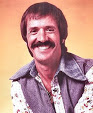
Mayor Jim Haggerty of Kingston (pictured to the left) has been elected chairman of the Luzerne County Home Rule Commission at the commission's inaugural meeting held Wednesday evening at Wyoming Seminary.
Veronica Ciaruffoli was elected Vice Chairperson, and Rick Morelli was elected Treasurer.

Haggerty is the three term mayor of the Municipality of Kingston and a practicing attorney. Kingston has operated under a home rule charter since 1976.

The commission is charged with the following:

"The government study commission shall study the form of government of the municipality to compare it with other available forms under the laws of this Commonwealth and determine whether or not in its judgment the government could be strengthened or made more clearly responsible or accountable to the people or whether its operation could become more economical or efficient under a changed form of government."

Furthermore:

"The government study commission shall report its findings and recommendations to the citizens of the municipality within nine months from the date of its election except that it shall be permitted an additional nine months if it elects to prepare and submit a proposed home rule charter and an additional two months if it chooses to elect its municipal council by districts."

The commission also appointed a budget committee comprised of the elected officers to approach the county for money to fulfill its mandate of studying the county government.

The commission plans to meet every Wednesday at 7:00 pm at the Stettler Learning Resources Center, Sprague Avenue, Kingston.

Public or Private


We want a comprehensive study done of Luzerne County government, and that will not happen if every meeting, every hearing, and every proceeding is open to the public. The study commission needs to meet in private (at certain times) in order to find out what works and what doesn't work in county government.

The debate on whether to have private meetings became very public when commission member Walter Griffith released e-mail correspondence between other commission members and him. Mark Guydish of the Times Leader got into the fray and fell down on the side of "all public, all the time."

Griffith, Guydish, and others are just plain wrong on this issue on political and legal terms.

We had OVC legal correspondent, Bruce Haller research the issue for us. Here are some of his findings.

"Home Rule" is governed by Pennsylvania Statutes, particularly Title 53, Chapter 29. With regards to meetings, Section 2920 states:

"The government study commission shall hold one or more public hearings, may hold private hearings and sponsor public forums and generally shall provide for the widest possible public information and discussion respecting the purposes and progress of its work."

The reason for private hearings is quite obvious, and we believe is why the commonwealth allows a commission to meet in private. It is analogous to the concept behind whistle blower statutes.

How can we expect to get an honest and unbiased account of the workings of county government if every interview of current county employees is subject to the scrutiny of the witness's fellow employees, the general public, and his or her boss?

Let's take the following example. The commission is looking into the inner workings of the clerk of courts office. Does anyone truly believe that a current employee is going to tell the commission at a public hearing that many of his fellow employees' jobs are unnecessary or that the office of prothonotary and clerk of courts should be combined, resulting in the layoff of half the staffs? It aint gonna happen.

If the commission decides to hold all public hearings, they will not get the honest look at county government, which the public wants and so desperately needs.

Griffith, Guydish, and others believe the Pennsylvania "Sunshine Act" applies to the home rule commission. Bruce also looked into this issue.

The Sunshine Act only applies to "agencies." The agency definition in the Sunshine Act does not include home rule commissions. Bruce also reviewed the dozen or so "home rule" cases which have made it to the courts of the commonwealth. None provided any guidance, either way, on whether home rule commissions are governed by the Sunshine Act.

When we look further into the Sunshine Act, we see that agencies may meet in private to discuss certain issues. Personnel matters, collective bargaining matters, the purchase or lease of property, ongoing litigation, and matters involving lawful privilege are the exceptions to the public meeting standard.

It is not conceivable that the commission would ever fall into one of these exceptions. If is also nonsensical to believe that the home rule laws written by the commonwealth would provide a private meeting option if the Sunshine Act prohibited such meetings.

Face it, the Sunshine Act does not apply and thankfully so.

We would end our discussion with that, but Guydish and Griffith make us continue.

After pontificating about the need of a "no exceptions" rule to public meetings of the home rule commission, Guydish wrote:

"Commission members can call each other outside of meetings, they can exchange documents, thoughts and ideas when they are not together. "

This raises another issue, besides the fact that Guydish believes closed door meetings among a few members to hammer out the details and make the real decisions is fine, as long as they meet as a "committee of the whole" at a later date and run through the motions.

The issue is that committee member Griffith has already decided that everything the commission does is public, including e-mail messages between commission members. He has already provided e-mails concerning the "public/private meetings" debate to the Times Leader and other media outlets.

We strongly believe that most of the meetings of the commission should be held in the public, but we also strongly believe that the commission should and must, within its own discretion, meeting in private when necessary.


Thursday, June 4, 2009

Another Day, Another Federal Subpoena


OVC has confirmed that Judge Mike Toole's tip staff, Thomas Marino has been served with a federal subpoena with regards to the ongoing corruption scandal in Luzerne County. An independent source familiar with the Wilkes-Barre jurist has corroborated the Times Leader story which appeared online today.


OVC wrote a few months ago that rumors were abound that Toole had come under suspicion from his days as a solicitor to the Wilkes-Barre Area School District. Two members of the Wilkes-Barre school board have resigned, including board president Jim Height. Brian Dunn has also resigned.


Height pled guilty last month to federal corruption charges, and Dunn has been charged federally, also.


More to come in the future.

Wednesday, June 3, 2009

Paperwork Prevents People From Seeking Public Office


Every so often we read a letter to the editor which strikes our fancy. Today was such a day when we read Democratic Kingston Council candidate Curt Piazza's letter to the Wilkes-Barre Times Leader.

Piazza ran unsuccessfully ran for the Democratic nomination to face incumbent Mayor Jim Haggerty (pictured to the left) in November. Piazza was defeated by Stephen Radzinski 494 to 402 in the May 19th primary.

Piazza wrote a letter to the editor, which appeared today in the Times Leader. He wrote it in response to the Times Leader's assertion that Piazza secured his council nomination the "easy way." The Times Leader was referring to the fact that Piazza was only one of two candidates on the ballot for four open council seats. Incumbents Republican council members Mike Jacobs and Sandy Kase won write-in nods on the Democratic side as well as winning Republican nominations.

Piazza took issue with this. He wrote:

"First there’s the paperwork: You have to follow the directions to the letter to fill out your nominating petitions. Then you have to trek out into the bitter cold to ask your fellow citizens and party members to sign your petitions. (This requires exactness too). Sometimes you have to put up with disgruntled residents slamming the door in your face.

Then you have to get your paperwork notarized and pay those fees. Then you submit your paperwork to the Election Bureau, hoping it will be approved. Then you have to submit a copy of the Statement of Financial Interests to your municipality.

All this takes a lot of time, patience and legwork; it’s not for the faint-hearted."

There are some interesting points to Piazza's writing. Piazza's biggest hurdle seems to be the "paperwork." In any borough in Pennsylvania such as Kingston, in order to appear on the primary ballot, one must get ten signatures from registered voters in his or her political party (actually nine, because you can sign your own petition.)

We are also curious why Piazza would have to "trek out into the bitter cold," since according to voter registration records, Piazza is residence is in a public housing building which encompasses at least fifty units. Records also show that many more than nine registered Democrats reside in that same building.

Be that as it may, if you have trouble finding nine registered voters of your party to sign a nomination petition (Jeddo Borough may be the exception,) you probably shouldn't be running for office.

Piazza's second bone of contention is the "statement of financial interest." The statement is a one page form which must be submitted by all candidates with your nomination petition. The form requires one to list their name, address, the office sought, occupation, real estate interests, direct sources of income, creditors, and interests in any business entities. The dollar amounts are not required.

Hardly a arduous task, ... or is it. Maybe Piazza has a point.

Piazza's opponent, and Democratic nominee Radzinski for mayor seemed to have a little trouble with this simple requirement. In a mistake which could have taken him off the ballot, if timely challenged by a Kingston Democrat such as Piazza , Radzinski filed his Statement of Financial Interest one week after the deadline. This is a fatal error which requires removal from the primary ballot. No such challenge was filed against Radzinski.

Being mayor of a town of 13,000 residents requires the preparation, reviewing, and filing of a lot of "paperwork." We wonder how overwhelmed Piazza would have been if he had won in May and then in the Fall. We also hope that candidate Radzinski is a little more careful and attentive if he ever becomes Mayor Radzinski.

Monday, June 1, 2009

The Final Post Mortem


Buzz had his annual post Memorial Day computer geek retreat in upstate New York, so we've fallen a little behind, but let's take one final look at the May primary in Luzerne County.

For the first time in a long time, the Luzerne County GOP decided to endorse candidates in a primary election. We covered the GOP endorsement in a prior blog. They endorsed in two uncontested contests --- Register of Wills and Jury commissioner --- along with two judicial endorsements and an endorsement in both the Prothonotary and and Controller races. They went 2 and 2.

When Terry Casey became the head of the Luzerne County GOP last year, he promised a new revitalized GOP. Things looked promising at the beginning of this year with the opening of a county headquarters, the hiring of a full time executive director, and getting Karl Rove to speak to a large crowd at its annual dinner. The endorsement of primary candidates also seemed like a good start.

With the GOP hurting badly on a national level, the myriad of Democratic scandals in Luzerne County gives promise to the county GOP. Since the county is so predominately Democratic, even to the point that such former GOP strongholds like Kingston and Forty Fort have switched from red to blue in the registration department, it is no wonder that all of the tainted public officials so far are Democrats. What a time for a county GOP resurgence.

The county GOP endorsed the only 2 registered Republicans out of seventeen who sought the judge seats. Attorney Richard Hughes won the top spot, just barely, on the GOP side. Attorney Mike Pendolphi, the other GOPer finished a dismal 14 out of 17. On the Democratic side, Hughes finished 14 and Pendolphi finished dead last. It doesn't look the the county Democrats are willing to put their full faith and support behind a Republican. Hughes is going to have trouble this fall, but that's the subject of another posting in the future.

In the controller and prothonotary races, the county GOP endorsed Carolee Medico Olenginski for proth and Attorney Nanda Palissery for controller. Olenginski won, but Palissery finished fourth in a five person race.

OVC knows that both Walter Mitchell and Nanda Palissery were recruited by the county GOP leadership to run for the respective offices. This recruitment was accompanied with promises of endorsements, limiting opposition, organizational support, and mostly importantly, money. The leadership failed to secure the endorsement for Mitchell, and failed to provide financial or any other support for the endorsed candidates. In the proth's race it was mostly due to lackluster enthusiasm for the endorsed candidate, but in the controller's race it just seemed to be a lack of enthusiasm in general.

The Protyhonotary race was an uphill battle for Mitchell. Olenginski had a great edge in name recognition throughout the county, having been the elected prothonotary for four years from 1998 to 2002. She also was able to portray herself as a victim of the corrupt Democratic machine. Without financial or organizational backing, Mitchell's campaign was doomed from the start.

Olenginski faces political newcomer Nancy McGinley Bellas in the fall, and we believe this may be the race to watch. Eventhough Olenginski's tenure at the prothonotary's office was filled with what we may term "erratic" and "eccentric" behavior, her public image is that of someone who was victimized by the good ol' boy network. Olenginski has a good chance of become Luzerne County's last "elected" prothonotary. We say "elected," because home rule will almost certainly eliminate this as an elected position.

The controller's race is a different story. Bob Morgan faced no opposition in the primary and appears to be a strong candidate. Walter Griffith, on the other hand, is a poor candidate whose only appeal is his misleading pledge to be a "full time" controller, and the fact that he has read the county code from cover to cover. We hate to break this to him, but there's a big difference between reading and understanding. Where we have no doubt that Griffith read the code from cover to cover, his actions throughout the past few years have shown, also with no doubt that he does not comprehend or understand what he read.

Morgan will outspend Griifth by a considerable margin. He has the ability to raise a lot of money, whereas Griffith does not. Griffith is thought of as something of a parlor joke within the GOP money circle in Luzerne County, so don't expect the big checks to flow into the Griifth war chest.

Griffith won the primary on name recognition alone. His name has been on the ballot and in the news for the past few years. The name reconition factor is obvious by the fact that former Democratic county commissioner Edd Brominski finished a strong second on the GOP side. Voters knew the name.

Voters focused primarily and almost exclusively on the judicial races, and we'd be willing to wager the UNIVAC 3000 on the fact that most voters didn't even realize there was a race for controller or prothonotary on the ballot until the screen appeared on the ES&S iVotronic touch screen voting system. In these types of races, name recognition always triumphs.

Griffith will be outmatched by organization and money come November, and Bob Morgan will cruise to victory. The GOP missed an opportunity here to take over the controller seat, which in all likelihood will remain an elected position when the county final turns to home rule.

Tuesday, May 26, 2009

Election Post Mortem, Volume I


Buzz and I treated the OVC staff to a weekend off, but now it's time to do a little Monday morning quarterbacking. Let's first look at the Scranton mayor's race.

We were a bit surprised by the closeness of the Scranton mayor's race on the Democratic side. Mayor Chris Doherty received a tough challenge from Gary DiBileo. The final tally showed Doherty with 8,677 or 52.56% and DiBileo with 7,736 or 46.86%. On the GOP side Bob Bolus, a candidate who would be ineligible to serve because of a felony conviction from some 15 years ago, was the only candidate on the ballot. He received 837 votes, but there were 1809 write-in votes, most of which went to Doherty.

DiBileo is a former Scranton school director and former Scranton City council member. He challenged the two term Doherty for a rematch of the 2005 mayor's race. In 2005, DiBileo garnered 47 percent of the vote.

We believe Doherty has done quite an admirable job as mayor by making the tough decisions required of a small city mayor. His personnel decisions were not popular among the uniformed personnel, but they were the right decisions. Fortunately enough Democrats in Scranton had the wisdom to send Doherty on to a third term.

Now to Luzerne County.

We were pleased, but not at all surprised to see the Home Rule question pass with 77.46 percent. After all, if ever there were a time to fix a broken government, now is the time in Luzerne County. We are optimistic that the charter study commission which was elected on Tuesday will put forth a plan that will be acceptable to a majority of Luzerne County voters.

The biggest race, by far, in Luzerne County was the race for two judicial seats. Magisterial District Judge William Amesbury of Wilkes-Barre was the top voter getter by a wide margin on the Democratic side, capturing 10,393 votes to second place Attorney Tina PolachekGartley at 8,248 votes.

Amesbury also won one of the Republican nominations, finishing second behind Attorney Richard Hughes. The vote totals were 4,845 for Hughes and 4,701 for Amesbury.

Amesbury ran an excellent campaign. Although he was outspent by a number of his opponents, Amesbury got the most bang for the buck. Amesbury may not have been everyone's first choice, but we rarely heard a negative word about the amiable Wilkes-Barre magistrate during our travels during the campaign. He also came across as a hard working, honest, and sincere man who just seemed right for the times.

Hughes ran a well organized campaign and had strong support among the party faithful. Throughout the campaign we ran into many a GOP folk who stood firmly behind the Mountaintop attorney. Hughes has been something of a judge candidate in waiting. We heard rumors of him pondering a run in both 2003 (the seat won by Mike Toole) and in 2007 (the seat won by District Attorney Dave Lupas.)

The Republican faithful rewarded Hughes with the top spot in 2009. This was probably the most predictable result in the judicial race. We thought Hughes was a gimme for one of the GOP nod since early in the election season.

In an earlier post, we stated that Gartley won the Democratic nomination for one reason --- she was a woman. We stand by that statement.

There was nothing in the Gartley campaign that set her apart from a field of fine candidates besides her gender. In a year when the electorate became tired of the good ol' boy network, Gartley fit the bill.

Gartley's success is a major reason why Judge Joe Musto lost. Musto was perceived to be one of the good ol' boys (not in that he was corrupt, but the people wanted someone "new" and Musto was too much of the same.

The biggest losers in the election were Tom O'Connor and Gene Sperazza. Both men spent over a $100,000, and both faired poorly and well out of the mix. (O'Connor 8th and Sperazza 9th on the Democratic side and O'Connor 5th and Sperazza 6th on the GOP side.) Neither campaign took off despite the money spent.

Attorneys Joe Sklarosky and Daniel Zola showed some electoral prowess on Tuesday, and we would not be surprised to see them in a sequel in 2011. There are at least two, and as many as five judgeships up in 2011. Ciavarella's seat is up, as well as Hugh Mundy's seat. He will be 70 next year. Ann Lokuta will have exhausted her appeals by then, and thus her seat will be up. Finally, Judges Tom Burke and Peter Paul Olzsewski are facing tough retentions battles and fall to the "no" vote come this November.

If you thought 17 candidates was a lot, wait and see what we get in 2001 if five seats are up.

So the general election is a battle between Gartley and Hughes, since Amesbury is virtually assured election by having won a spot on both the Republican and Democratic sides. Hughes is a definite underdog, and we believe he will lose in November unless the Gartley campaign experiences a major blunder. We are not in a position to speculate on whether something may emerge to upset the Gartley ship of state, but we would not be surprised if something does emerge.

Tomorrow we will take a look at some other Luzerne County races of interest.

Thursday, May 21, 2009

Election Post Mortem


We'll be doing an election post mortem within the next few days. We can't guarantee it gets done before Memorial Day, but we will give it a shot.

Two comments we have to make now are these.

Number One. We read in the Citizens' Voice that Tina Gartley downplayed the gender issue when explaining her victory. Tina Gartley won the Democratic nomination for judge in Luzerne County for one reason --- she is a woman. Or perhaps we should put it this way, does anyone out there truly believe that Gartley would have even come close if she were a man? We believe if she were she'd be down near Pendolphiland. More to come.

Number Two. How gullible is the Republican base? Daniel Zola, a thirty three year old Democratic attorney from Hazleton, whose greatest claim to fame is his love for hunting, finishes third in the GOP field. He does this by trying to scare the bejesus out of the GOP base with his crime ridden streets mailer and his Second Amendment rights mailer. Gotta give the guy credit. More to come.